The Timeless Appeal of Koi Fish in Black and White: A Designer's Guide to Classic Japanese Imagery
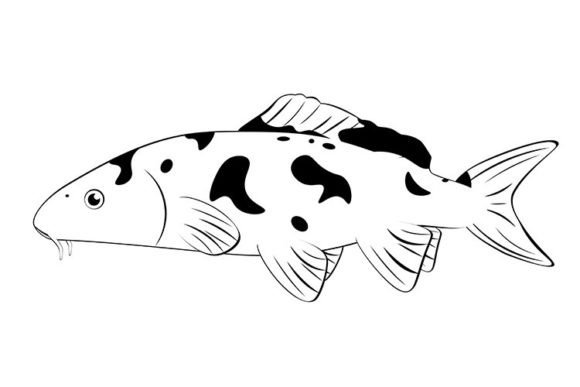
In the world of graphic design and artistic illustration, few subjects command as much respect and recognition as the Koi fish in black and white. While we often associate these magnificent creatures with vibrant splashes of red, orange, and gold, there is a profound depth and elegance found when they are rendered in monochrome. This specific aesthetic strips away the distraction of color to focus on form, movement, and the intricate details that make the Koi such an enduring symbol in Japanese culture.
For designers, artists, and hobbyists alike, the availability of high-resolution JPG images and editable EPS vector files dedicated to this theme opens up a vast array of creative possibilities. Whether you are crafting a logo for a boutique fitness studio, designing a tattoo concept, or creating a decorative piece for a modern home, the versatility of black and white Koi carp illustrations offers a unique solution that bridges traditional artistry with contemporary utility.
Why Choose Monochrome for Koi Carp Illustrations?
The decision to utilize Koi fish in black and white designs is rarely accidental; it is often a strategic choice rooted in visual psychology and practical application. When color is removed from the equation, the viewer's eye is immediately drawn to the flow of the lines, the texture of the scales, and the dynamic posture of the fish. This reductionist approach creates a sense of sophistication and timelessness that full-color images sometimes struggle to achieve.
In many industries, color can be a liability. Consider the textile industry, where printing costs are directly tied to the number of ink colors used. A design featuring a complex, multi-colored Koi pattern might require expensive Pantone matching and multiple passes on the press. However, a black and white Koi design can be printed using a single black ink, significantly reducing production costs while maintaining a striking visual impact. This makes it an ideal choice for screen printing on t-shirts, tote bags, and promotional merchandise.
Beyond cost savings, the monochrome palette offers superior scalability. When a design needs to be shrunk down to fit a business card or blown up to cover a billboard, color gradients can sometimes muddy the image. In contrast, the sharp contrast between pure black and stark white ensures that the details of the Koi remain crisp and legible at any size. This is particularly crucial for branding elements where clarity is paramount.
The Technical Advantage of Vector Files (EPS)
When sourcing digital assets for your projects, the file format is just as important as the artwork itself. The inclusion of 4 Editable EPS vector files in a collection of Koi imagery represents a significant upgrade over standard raster images. EPS (Encapsulated PostScript) files are vector-based, meaning they are constructed using mathematical equations rather than a grid of pixels.
This distinction allows for infinite scalability without any loss of quality. You can take a small icon of a Koi and expand it to the size of a building facade, and the edges will remain perfectly smooth. Furthermore, because these files are editable, they offer a level of flexibility that static images simply cannot match. Designers can:
- Isolate Elements: Separate the tail fins from the body to create new compositions or animations.
- Modify Colors: While the source is black and white, vectors allow you to easily fill specific areas with gradients or patterns if you decide to introduce color later.
- Adjust Line Weight: Thicken or thin the outlines to suit different print resolutions or stylistic preferences.
- Integrate Text: Wrap text around the flowing curves of the Koi's body seamlessly, ensuring the typography follows the natural rhythm of the fish.
For professionals working in Adobe Illustrator, CorelDRAW, or other vector-based software, having access to these editable layers saves hours of manual tracing and allows for rapid prototyping of ideas.
High-Resolution JPGs for Photorealistic Applications
While vectors excel in logos and scalable graphics, there are scenarios where the texture and nuance of a high resolution JPG image are indispensable. These files capture the subtle shading and atmospheric effects that give the Koi a lifelike presence. They are perfect for backgrounds, website headers, and large-format prints where the image is not going to be resized frequently.
A high-resolution JPEG of a black and white Koi can serve as a powerful backdrop for a blog post about mindfulness, a menu for a sushi restaurant, or a wallpaper for a digital device. The grain and tonal variations captured in these images mimic the feel of traditional sumi-e ink wash paintings, adding an organic, hand-crafted touch to digital media. This blend of digital precision and analog texture is what makes the Koi fish in black and white so compelling in modern web design.
Cultural Significance and Modern Interpretation
To truly appreciate the Koi fish in black and white, one must understand its roots. In Japanese culture, the Koi is a symbol of perseverance, strength, and good fortune. Legend tells of Koi swimming upstream and transforming into dragons upon reaching the waterfall, representing the triumph over adversity. Historically, these fish were depicted in ukiyo-e woodblock prints, often utilizing limited palettes due to the constraints of natural dyes.
Modern designers have embraced this heritage, reinterpreting the classic symbols for today's audience. The monochrome Koi has found a home in streetwear fashion, appearing on hoodies and sneakers as a mark of resilience and style. It is equally popular in the wellness community, where the calm, fluid motion of the fish represents balance and inner peace. By choosing a black and white palette, designers tap into this rich narrative without relying on clichéd color associations, allowing the viewer to project their own meanings onto the image.
Practical Applications Across Industries
The versatility of these assets means they can be integrated into a wide variety of workflows. Here are some practical scenarios where decorative Japanese fish koi carp in black and white illustration shines:
- Tattoo Artistry: Tattoo artists often prefer line work and black shading for longevity. A vector file of a Koi allows them to scale the design to fit any part of the client's body, from a delicate wrist piece to a full back sleeve, ensuring the lines remain bold and clear.
- Interior Design: Architects and interior designers use these images for custom murals, window decals, and fabric patterns. The monochrome scheme fits effortlessly into minimalist, industrial, or zen-style interiors, adding a focal point without overwhelming the space.
- Branding and Identity: For companies in the finance, law, or consulting sectors, the Koi symbolizes steady growth and upward mobility. A sleek, black and white logo conveys professionalism and stability, distinguishing the brand from competitors who may rely on more colorful, playful imagery.
- Editorial Design: Magazines and newspapers often use black and white photography and illustration to convey serious or timeless topics. A high-quality Koi image can break up long columns of text, adding visual interest while maintaining a sophisticated tone.
Selecting the Right Assets for Your Project
Before downloading or purchasing a set of Koi images, it is essential to evaluate the specific needs of your project. Are you looking for a simple silhouette for a watermark, or a detailed rendering for a poster? If the latter, ensure the high resolution JPG images meet the DPI requirements of your printer (typically 300 DPI for print).
If you plan to animate the fish or integrate it into a user interface, the editable EPS vector files are non-negotiable. Check the complexity of the vector paths; overly dense nodes can slow down your software, while too few nodes might result in jagged edges. Look for collections that offer both formats, giving you the best of both worlds. This dual-format approach ensures that whether you are working on a quick social media graphic or a large-scale architectural projection, you have the right tool for the job.
Additionally, consider the composition. Does the Koi swim left or right? Does it appear alone or amidst water ripples and lotus flowers? The direction of the fish can influence the flow of your layout. A fish swimming toward the center of the page draws the eye inward, while one swimming outward can suggest leaving or expansion. Understanding these nuances helps in selecting the exact variation that fits your narrative.
Maintaining Quality in Digital Workflows
Once you have acquired your assets, proper management is key to maintaining their quality. Always keep the original EPS and high-res JPG files in a secure archive. Never edit the master files directly; instead, save your working copies with version numbers. This practice prevents accidental corruption and allows you to revert to previous iterations if a design direction changes.
When exporting final deliverables, pay attention to the output settings. For web use, converting the vector to SVG or optimizing the JPG for web can reduce file sizes without sacrificing visual fidelity. For print, always request a proof before running a full batch. Even with the best vector files, paper stock and ink types can affect how the black appears on the final product. A deep, rich black on a glossy brochure will look different than a matte finish on a book cover.
The fusion of traditional Japanese aesthetics with modern digital tools is a testament to the enduring power of the Koi. By leveraging the combination of Koi fish in black and white imagery, designers can create works that are not only visually stunning but also culturally resonant and technically robust. Whether through the crisp lines of an EPS file or the textured depth of a high-resolution JPG, these assets provide a foundation for creativity that transcends trends and speaks to the universal appreciation of beauty and grace.